

Mate casino Plinko
Introduction
Plinko looks almost disarmingly simple at first glance. A ball drops from the top of the board, hits a field of pegs, bounces left and right, and eventually lands in a payout slot at the bottom. That visual simplicity is exactly why the format stands out. On the Mate casino Plinko page, the game does not ask the player to learn paylines, bonus rounds, symbol values, or layered side features before the first round. The entry point is immediate.
But that is only the surface. In practice, Plinko is not just a casual drop-and-watch experience. Its real appeal comes from the tension between a clean interface and a surprisingly sharp risk profile. The player makes a few core choices, usually stake size, number of rows, and risk level, and those choices dramatically change the session. The same board can feel calm and repetitive on low risk, or highly aggressive on high risk, where long stretches of small returns can suddenly be interrupted by a rare top multiplier.
That is why Mate casino Plinko deserves a closer look as a standalone product rather than a minor side game. It offers a different rhythm from classic slots, a different psychological pull from roulette or Mate Casino blackjack guide, and a very specific kind of volatility that many players misunderstand until they try it for themselves. I have reviewed enough casino games to say this with confidence: Plinko is one of the clearest examples of a game that appears transparent, yet still produces very different real-world outcomes depending on how it is configured.
In this article, I will break down how Plinko works, what its random movement actually means for the player, where the genuine strengths of the format lie, and where caution is needed before starting a session at Mate casino.
What Mate casino Plinko actually is and why it draws so much attention
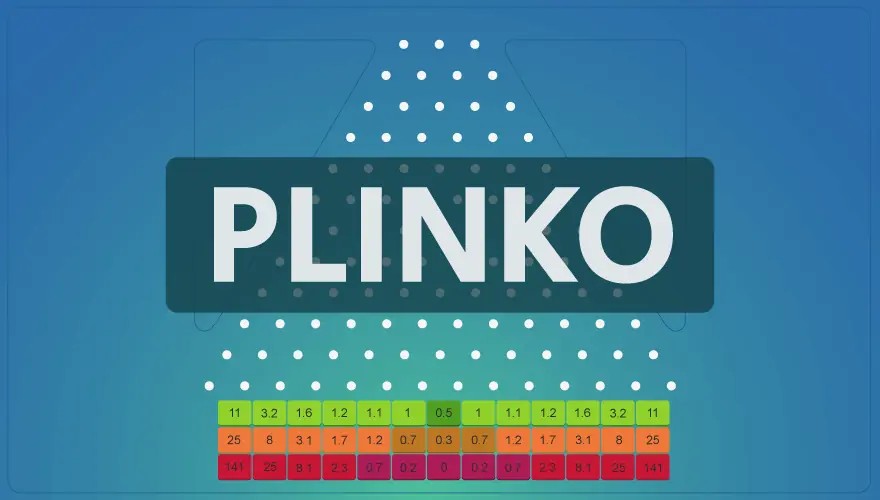
Plinko is a probability-based casino game built around a vertical board filled with pegs. The player drops a ball from the top, and each collision sends it slightly left or right until it reaches one of several payout zones. The multiplier attached to the final slot determines the result of the round. That is the whole structure, and that stripped-back design is a major reason the format has become so visible across modern gambling platforms.
The attraction is not only visual. Plinko delivers instant readability. A player can understand the basic outcome path in seconds, which is not always true for slots with expanding wilds, cascading reels, cluster pays, or layered feature systems. On Mate casino Plinko, the board itself becomes the event. You can follow every bounce, anticipate where the ball might land, and still never feel fully certain about the result.
That combination matters. The game gives an impression of openness because the entire process is shown on screen. There are no hidden reel strips to imagine and no bonus engine to decode. Yet the randomness remains intact. This creates a very specific tension: the player sees the path, but cannot meaningfully control it after release.
There is also a strong pacing advantage. A Plinko round resolves quickly, often in just a few seconds, but it still feels more eventful than a one-click instant win format. The ball’s travel time creates a short window of suspense, and that suspense is enough to keep players engaged. One of the most memorable things about Plinko is that it often feels slower than it really is. The ball takes a visible journey, but the session can still move very fast over 50 or 100 rounds.
That is one reason the game became so noticeable. It is easy to enter, easy to watch, and easy to underestimate.
How the Plinko mechanic works in practical terms
To understand Mate casino Plinko properly, it helps to separate the visual design from the mathematical structure. Visually, it is a bouncing ball. Mathematically, it is a chain of binary outcomes. At each peg, the ball effectively shifts left or right. Over many rows, those tiny directional changes create a distribution of possible landing positions.
In most versions, the player chooses from several setup options before dropping the ball:
Bet size — the amount staked on each drop.
Risk level — usually low, medium, or high, which reshapes the payout distribution.
Rows — the depth of the board, affecting the number of bounces and the spread of outcomes.
These settings are not cosmetic. They define the session. A lower-risk board usually places more of the return potential around the center, where balls land more often. A higher-risk board shifts more value toward the extreme edge slots, which are much harder to hit. The result is simple to describe but important in practice: low risk tends to produce more frequent modest returns, while high risk often creates longer dry stretches in exchange for access to larger multipliers.
The movement logic also explains why central slots appear more often than outer ones. Over repeated drops, the ball naturally clusters around the middle because there are more possible paths leading there. Edge results require a more unusual sequence of directional shifts. This is a crucial point for players who see a large multiplier on the far side of the board and start treating it as a realistic short-term target. It exists, but it is not where the board wants to send the ball most of the time.
| Setting | What it changes | What it means during play |
|---|---|---|
| Bet size | Value of each drop | Directly affects bankroll pressure and session length |
| Risk level | Payout distribution | Changes whether the session feels smoother or more swing-heavy |
| Rows | Board depth and outcome spread | Can increase suspense and widen possible landing zones |
Another practical detail is that Plinko is often played in rapid succession. Because the setup is easy to keep constant, many players drop ball after ball with minimal pause. That can be useful for testing a preferred configuration, but it can also hide how quickly variance accumulates. A simple interface does not mean a soft session.
Why the game feels engaging and how its rhythm changes during a session
The rhythm of Plinko is one of its strongest design traits. Unlike slots, where the player waits for symbol alignment, here the action is centered on a visible physical journey. The ball is always doing something. That makes each round feel active, even though the player’s actual input is limited.
On Mate casino Plinko, the pace tends to be defined by three things: drop speed, board depth, and the chosen risk setting. A shallow, low-risk setup can feel almost procedural. You click, watch a short bounce path, collect a small return or a minor miss, and move on. A deeper board with a high-risk profile feels different. The ball takes longer to settle, and every near-edge movement creates more tension because the outcome spread is wider.
This is where Plinko separates itself from many other casino products. It creates suspense without needing a bonus round. The anticipation is built into the fall itself. I would go further: one of the reasons players stay with Plinko longer than expected is that every drop feels like a miniature story. The ball never follows the exact same route, and the eye keeps searching for patterns even when the results are random.
That search for patterns is one of the game’s most interesting psychological hooks. Players often start believing the board is “leaning” to one side, or that edge hits are “due” after a run of central landings. In reality, each drop is independent. But because the movement is visible and directional, the game invites interpretation more strongly than a slot spin does.
This leads to a useful practical observation: Plinko can feel more controllable than it really is. The board is fully visible, the options are clear, and the path is animated in front of you. That transparency is real at the interface level, but it should not be mistaken for predictability.
How risky Plinko really is and which players will handle it best
Plinko can be a mild game or a brutal one depending on configuration. That is not an exaggeration. The same format can behave like a steady low-multiplier grinder or like a high-volatility chase product with long losing sequences. The key variable is not the visual board. It is the payout map attached to it.
In low-risk mode, the board usually rewards central landings with modest multipliers and keeps the gap between common and rare outcomes relatively narrow. This can make the session feel more stable, although it does not remove randomness. In high-risk mode, the middle often becomes less rewarding and the extremes hold much more value. That changes the emotional profile of the game immediately. The player may go through many drops with weak returns while waiting for a rare result that may never arrive within the session.
So who is Plinko for?
It suits players who enjoy short, fast rounds and do not need layered bonus systems to stay engaged.
It suits players comfortable with variance, especially if they deliberately choose medium or high risk.
It suits players who like visible randomness rather than abstract number generation hidden behind reels.
It may not suit players who want strategic depth in the classic sense. Once the drop begins, there is no decision-making. It also may not suit players who rely on frequent medium-sized returns to stay comfortable, particularly if they are tempted by high multipliers and move too quickly into aggressive settings.
One important reality check: high-risk Plinko can drain a bankroll faster than its playful look suggests. The board resembles an arcade concept, but the payout curve can be much harsher than the presentation implies.
What players should understand about probabilities, streaks, and possible outcomes
Before launching Mate casino Plinko, the player should understand a basic truth: visible movement does not cancel probability. The ball may look as if it is reacting naturally to the board, but the long-term result distribution still reflects the game’s mathematical design.
The most common misunderstanding is to assume that because edge multipliers are displayed openly, they are realistic targets over a short sample. They are not. Extreme outcomes are usually rare by design. The board often channels more balls toward the center, and the payout structure is built around that tendency.
Another misunderstanding concerns streaks. Plinko produces streaks very naturally. You can see repeated central landings, repeated low multipliers, or several disappointing drops in a row. This does not mean the next round is “ready” to compensate. The game does not owe the player balance in the short term.
Here is the practical way to think about it:
Short sessions can be highly misleading. A brief run may look either much better or much worse than the average behavior of the board.
Rare top multipliers should be treated as exceptional events. They are part of the attraction, not something to budget around.
Changing risk level changes the emotional shape of the session. It does not create an advantage over the game.
I would add one more observation that many players only learn after experience: Plinko often creates sharper emotional swings than slots with the same stake size. The reason is not only volatility. It is visibility. Watching a ball narrowly miss a high-paying edge slot can feel more intense than a slot spin that simply stops on an ordinary line result.
How Plinko differs from slots and other mainstream casino games
Plinko sits in an unusual position. It is not a slot in the traditional sense, even though many players approach it through slot-oriented casino platforms. It has no reels, no paylines, no symbol combinations, and usually no feature round structure. The core event is a single drop with a multiplier outcome.
Compared with classic slots, Plinko is more transparent in presentation but narrower in content. A slot can offer theme, soundtrack, symbol hierarchy, Mate Casino free spins, expanding elements, and multiple feature layers. Plinko strips most of that away. What it gives instead is directness. The player chooses the setup and sees the result path unfold immediately.
Compared with roulette, Plinko offers a stronger visual journey per round. Roulette resolves in a clean final landing, but Plinko builds suspense through multiple impacts before the result appears. Compared with blackjack, it has almost no tactical component. Compared with crash-style products, it feels less confrontational and more observational, even when the risk level is high.
| Format | Main appeal | What Plinko does differently |
|---|---|---|
| Classic slots | Features, themes, bonus rounds | Removes complexity and focuses on one visible outcome path |
| Roulette | Simple betting with clear probabilities | Adds an animated journey that increases tension before the result |
| Blackjack | Decision-making and table logic | Offers almost no in-round strategy after launch |
| Crash games | Timing and cash-out pressure | Replaces active exit decisions with passive observation of the drop |
The practical takeaway is straightforward. Plinko is best understood as a probability-driven instant game with a strong visual layer, not as a lightweight slot clone.
Where the format performs well and where it becomes limited
Plinko has real strengths, and they are easy to identify when the game is judged on its own terms. First, it is accessible. A new player can understand the board within moments. Second, it creates suspense efficiently. The ball’s path gives each round shape without adding complicated rules. Third, it offers adjustable intensity. Risk settings and row counts let the player choose a calmer or more aggressive session style.
There is also a usability advantage. Because the interface is usually clean, it is easier to keep track of what you are doing. In some modern slots, feature density can blur the relationship between stake and outcome. Plinko is clearer. You know what you selected, and you know where the result came from.
Still, the format has limits. The most obvious is repetition. If a player needs evolving features, unlockable stages, or thematic immersion, Plinko may feel thin after a while. The board is the board. The variation comes from probabilities and configuration, not from content expansion.
Another limitation is that the simplicity can encourage overconfidence. Because the controls are minimal, some players assume they have fully mastered the product after a few rounds. In reality, understanding the interface is not the same as respecting the payout distribution. This gap between surface clarity and bankroll impact is one of the defining traits of Plinko.
A final weak point is that high-risk play can become emotionally narrow. If the session turns into repeated attempts to hit a rare edge multiplier, the experience may stop being engaging and start feeling mechanically stubborn. That is usually the point where the format stops fitting the player rather than the other way around.
What to check before starting a session on Mate casino Plinko
Before playing, I recommend treating Plinko less like a novelty board and more like a configurable variance tool. A few checks make a real difference:
Look at the risk setting first. This is the main factor shaping the session. Do not choose high risk only because the top multiplier looks attractive.
Keep the stake proportional to the speed of play. Plinko rounds resolve quickly, so even moderate bets can add up faster than expected.
Pay attention to row count. More rows can increase suspense and spread, but they can also make the chase for extreme outcomes feel more seductive than practical.
Use demo mode if available. It helps reveal how different settings actually feel over a sequence of drops.
The most useful mindset is to decide in advance what kind of session you want. If the goal is a more measured experience, low or medium risk makes more sense. If the goal is to tolerate long stretches of weak returns in exchange for a shot at a large multiplier, then high risk is at least an honest choice. Problems usually start when the player wants both stability and explosive upside from the same setup.
That trade-off sits at the center of Mate casino Plinko. The game does not hide it, but it also does not soften it.
Final verdict on Mate casino Plinko
Mate casino Plinko offers something many Mate Casino games before making a deposit do not: a very clear premise with a surprisingly sharp practical edge. It is easy to learn, visually readable, and capable of creating immediate suspense without leaning on complex bonus architecture. That is the format at its best. It turns a simple falling-ball concept into a fast, probability-driven session that can feel either smooth or severe depending on how the player sets it up.
Its strongest qualities are clarity, pace, and adjustable intensity. Its main caution points are just as clear: the game can move quickly, high-risk settings can be unforgiving, and the visible board can create a false sense of control. Plinko is not complicated, but it is not harmlessly simple either.
I would recommend it to players who value direct mechanics, quick rounds, and a more visual expression of randomness than slots usually provide. I would be more cautious with it for players who want feature depth, tactical involvement, or a steadier emotional curve. For those players, another format may fit better.
In the end, Mate casino Plinko is worth trying if you want a game where the rules are easy to grasp but the session still has real tension. Just go in with the right expectation: what you are getting is not a strategy game or a story-driven slot alternative, but a clean, high-clarity test of probability, pacing, and restraint.
FAQ
What happens when a ball drops in Plinko?
A ball falls through the board and bounces off pegs until it lands in a payout slot. The slot it finishes in determines the multiplier result for that round.
How does the multiplier work during Plinko play?
Each payout slot is linked to a multiplier value. When the ball lands, the game applies that multiplier to the selected bet and shows the win for the round.
Is Plinko considered a higher risk casino game?
Plinko is typically fast-paced and multiplier-based, so results can move quickly from round to round. Volatility will be reflected in the game settings shown before play, so it is worth checking before starting real-money play.
How can a player launch Plinko right after signing in?
Login to the casino account, then open the Plinko game in the game lobby. After entering the game, select the bet and start the next round using the in-game controls.